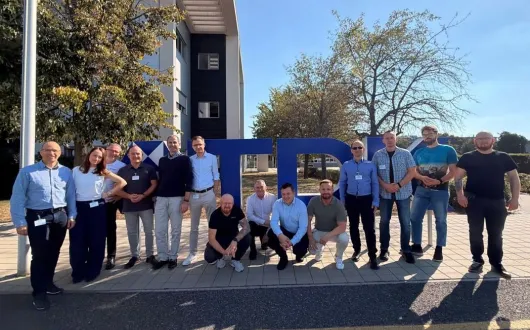
Our Institute’s staff members 👉 D.Sc. Eng. Robert Olbrycht, 👉 Dr. Eng. Rafał Kasikowski, and 👉 Dr. Eng. Jakub Piskozub, together with 👉 Dr. Eng. Łukasz Ruta from the Department of Semiconductor and Optoelectronic Devices, took part in a study visit to the production facilities of TDK Hungary Components Kft. in Szombathely, Hungary. The visit was organized at the invitation of TDK Electronics 🤝
News
Authored on
Kategorie
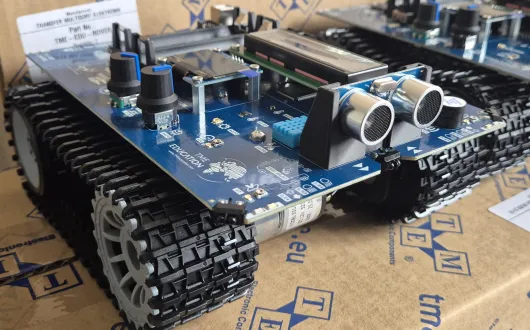
As part of a donation from TME (Transfer Multisort Elektronik), our Institute received TME-EDU-ROVER educational kits featuring tracked rover platforms. The rovers were developed through a collaboration between TME and researchers from our Institute. 🤝💙
Authored on
Kategorie
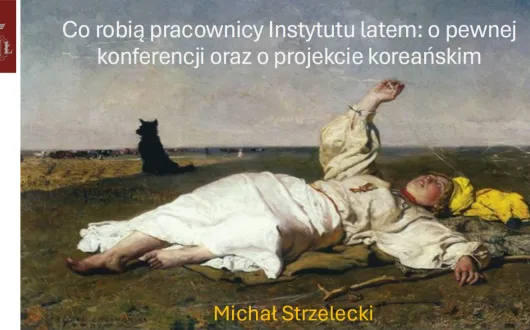
We kicked off the new academic year with a seminar led by Prof. Michał Strzelecki, entitled "What Do Institute Staff Do in the Summer? On a Conference and a Korean Project." 🌏🔬
Authored on
Kategorie
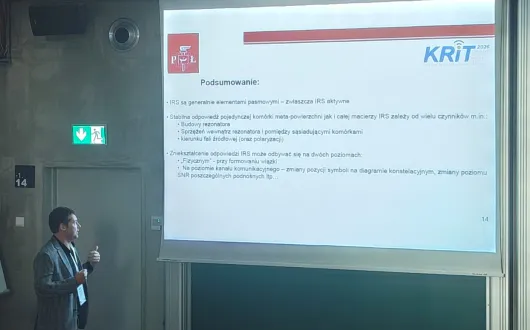
From September 23-25, 2026, the next edition of the Radiocommunication and Teleinformatics Conference (KRiT) was held at Wrocław University of Science and Technology. The event was dedicated to the latest developments in radiocommunication, telecommunications, and ICT networks. The Institute of Electronics was very well represented at this year’s KRiT.
Authored on
Kategorie
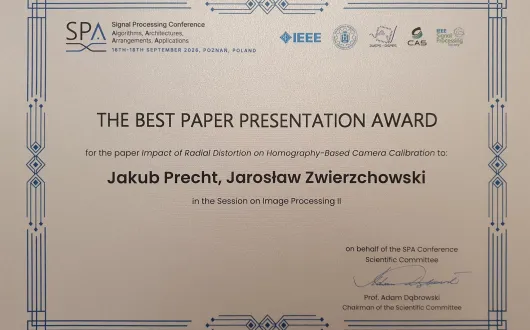
We are delighted to announce that M.Sc. Eng. Jakub Precht, a PhD student at our Institute, received the Best Paper Presentation Award in the Image Processing II session at the Signal Processing: Algorithms, Architectures, Arrangements, and Applications (SPA 2026) conference in Poznań. 🎓👏
Authored on
Kategorie
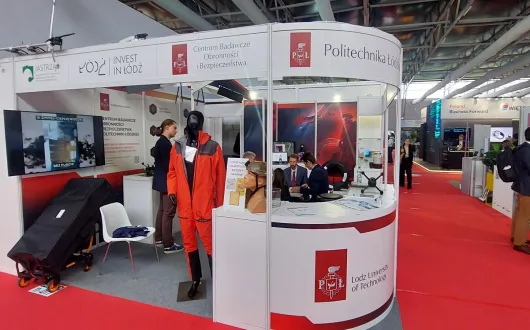
At the International Defence Industry Exhibition MSPO 2026 in Kielce, representatives of Lodz University of Technology presented research findings and innovative technologies developed at the university. 🎯🔬
Authored on
Kategorie
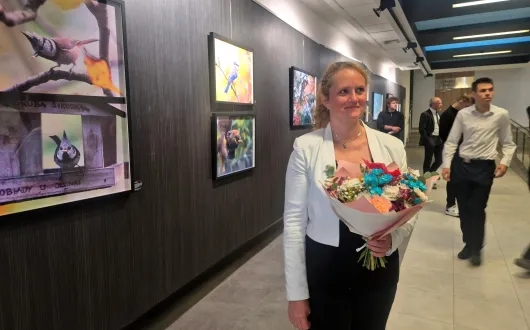
Today, the official opening of the photography exhibition by our colleague, Dr Aleksandra Królak, took place.
Authored on
Kategorie
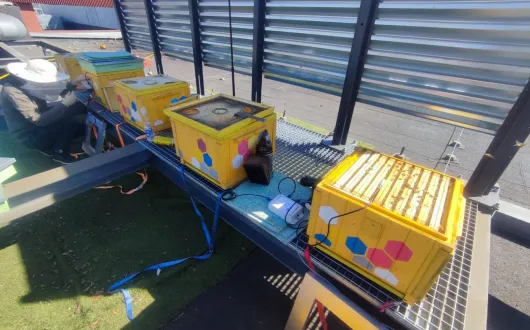
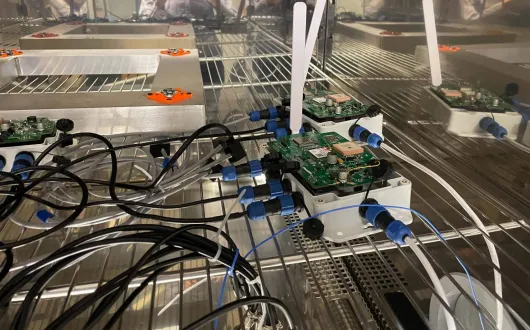
In their latest publication in IEEE Access, Sebastian Górecki, Prof. Sławomir Hausman, and Prof. Piotr Korbel from the Institute of Electronics at Lodz University of Technology, together with Prof. James Brusey from Coventry University, demonstrate how smart sensors and data analysis can be used to monitor beehives.
Authored on
Kategorie
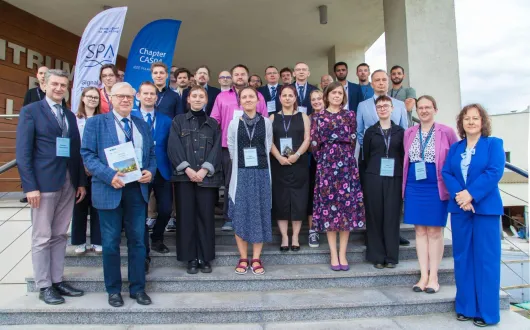
From September 16-18, 2026, the 29th edition of the Signal Processing: Algorithms, Architectures, Arrangements, and Applications (SPA 2026) conference was held at Poznan University of Technology. The event was an international scientific and technical meeting dedicated to the broad field of signal processing.
Authored on
Kategorie
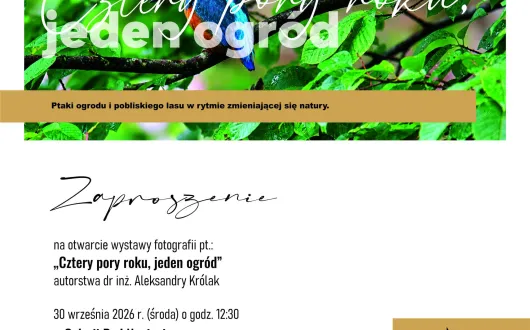
"Four Seasons, One Garden" - join us for a photography exhibition by our colleague Ola Królak.
Authored on
Kategorie
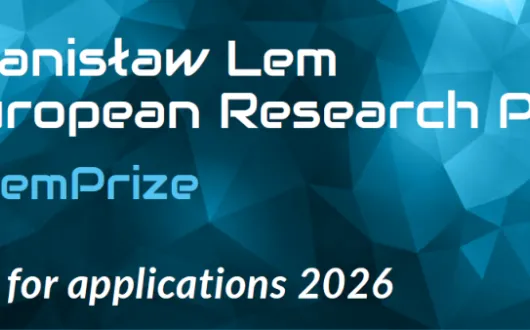
Wrocław University of Science and Technology invites nominations for the Stanisław Lem European Research Prize, an award recognizing young researchers for outstanding scientific and engineering achievements with the potential to positively impact the future of civilization.
Authored on
Kategorie
The latest publication by PhD student Sebastian Górecki, who is conducting his research under the supervision of Prof. Sławomir Hausman and Prof. Piotr Korbel, focuses on the design of energy-efficient AIoT devices that combine IoT sensors with local data processing and TinyML models.
Authored on
Kategorie
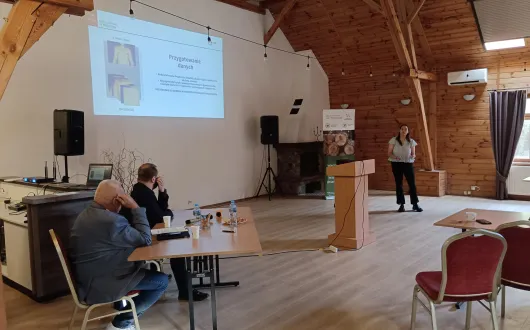
During the 10th School of BioTechnological Systems Engineering, held on September 9-12, 2026, at a picturesque lakeside conference and leisure center in Guzowy Piec, our student Karolina Dzwonkowska presented her research. 🎓
Authored on
Kategorie
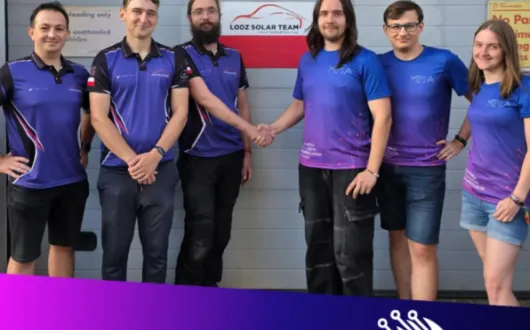
We are pleased to announce the beginning of a collaboration between MIPSA Student Research Group, affiliated with the Institute of Electronics at Lodz University of Technology, and Lodz Solar Team. 🤝☀️
Authored on
Kategorie
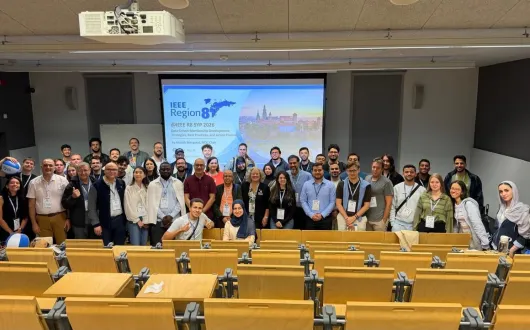
From July 20 to 24, 2026, members of the MIPSA Student Research Group, affiliated with our Institute, participated in the IEEE Region 8 Student & Young Professional Congress 2026, held in Kraków.