The visually impaired indicate limited mobility as one of the main problems affecting almost all activities of daily living. In this work we demonstrate how the technique of interactive sonifcation can be applied in a simple travel aid for the blind. We use the so-called depth images and their histograms termed "U-depth" which are simpler for auditory representation of the environment to the blind user.
Authored on
Kategorie
Nowadays, a healthy, active lifestyle is more and more important to us. Many people use sports watches or fitness bands to plan their workouts. This type of devices usually collect data such as number of steps and heart rate. In the case of heart rate signal the accuracy of the data recorded from optical sensors is of key importance.
Conducted research include development of methods for preprocessing and analysis of heart rate signal recorded using of non-invasive techniques, as well as for the determination of time-frequency parameters. Another aspect concerns development of methods for visualization of patterns occurring in time series in relation to heart rate variability, which may carry important information about the patient's health.
Authored on
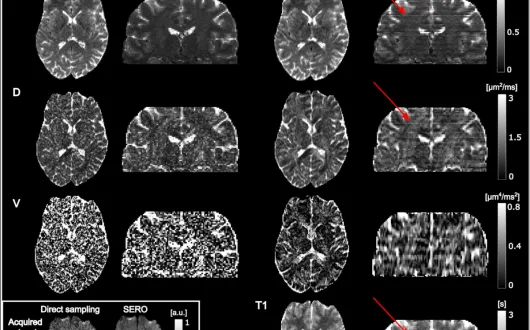
Medical images recognition involves consideration of multiple factors responsible for their formation. This knowledge is required because image brightness and contrast depend on both a diagnosed organ state, imaging parameters, as well as interaction between tissue and external signals, such as e.g. RF excitation signal. Moreover, in the case of dynamic imaging sequences, such as perfusion imaging, it is the signal temporal variation which is evaluated. This variation depends on clinically important parameters describing the course of biophysical processes at the tissue, organ and the body scale.
Authored on
Voice is the basic interpersonal communication modality and is of particular importance in such professions as teacher, journalist or conference center employee. Early diagnosis of occupational voice disorders is becoming one of the health priorities. Current international standards emphasize the need for comprehensive voice assessment in phoniatric examinations. In recent years, techniques for recording laryngoscopic images have been developed, including the sequence of images of vocal folds vibrations. Effective methods of computer analysis of such images are being developed. These techniques contribute to the objectification of phoniatric diagnostics.
Authored on
Trivializing, man is what he eats and drinks. Diet has a direct impact on our well-being, physical fitness, health and quality of life. This fact is an obvious motivation to carry out the work on the analysis of food quality. In our case, we offer means of such the analysis using computer vision and image processing methods.
Authored on
Image texture is a rich source of information about the objects visible in the image. This applies especially to biomedical images. Image texture visualized by means of various medical imaging modalities represents the properties of organs and tissues. Texture parameters reflect the physiological properties of such structures. This enables segmentation of organs, detection of lesions and an assessment of pathological changes degree. The significance of texture analysis for aided imaging diagnostics has been demonstrated for all kinds of imaging modalities, including computed tomography (CT), Magnetic Resonance Imaging (MRI), ultrasound (USG) and optical imaging.
Authored on
Kategorie
Worldwide, there are 314 million of visually impaired and 45 million of them are blind. According to EU reports for every 1000 Europeans 4 are blind or visually impaired. Vision loss is the most serious sensory disability that causes approx. 90% depravation of entire multi sense perception for a human. In spite of a long lasting research efforts independent mobility and orientation aids for the blind still await for a ground-breaking technology that would effectively support visually impaired. No single solution of electronic travel aids has gained a wider acceptance within the blind community. The white cane (with no mounted electronics) still remains the primary travel aid for the blind [1].
Authored on
Kategorie
One of the main barriers encountered by blind people is access to graphic information, including photos, maps, drawings and pictures. There is a need to develop effective methods for processing visual information into sensory signals that are accessible to blind people. This work concentrates on expanding and acquiring new knowledge in the field of presentation of visual scenes for the blind using the senses of touch and hearing. The research hypothesis is as follows: it is possible to develop tactile-controlled sound patterns allowing the blind user to correctly interpret the image displayed on the touch screen.
Authored on
Kategorie
Even the best electronic travel aids (ETAs) supporting blind people in independent travel are unable to provide assistance that another person can offer. Modern cell phones are equipped with very efficient processors and, often, very good quality digital cameras. Almost every smartphone is equipped with a set of position sensors enabling the detection of phone movement, its GPS location and orientation. Data recorded by mobile phones can be used as additional information needed to obtain support for a blind person from a remote assistant equipped with a suitable terminal.
Authored on
Kategorie
Brain-Computer Interfaces (BCIs) are devices, which acquire raw brain activity signals, analyze them, and translate them into commands that are transferred to output devices. In such a way BCI communication systems are independent from the brains regular output pathways of peripheral nerves and muscles. For that unique reason, such devices may someday enable people with disabilities, including paralyzed people to use the computer and other technical equipment, on a par with other users.