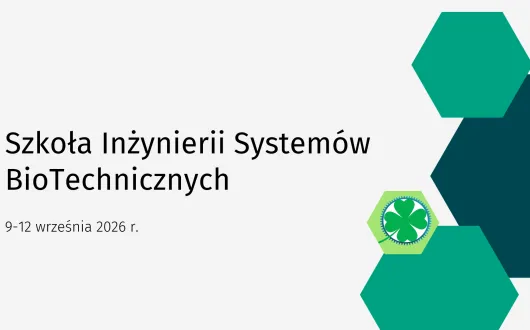
We warmly invite you to participate in the 10th School of Biotechnical Systems Engineering, which will take place on September 9-12, 2026, in Guzowy Piec in the Masurian region 🌿🏡
Authored on
Kategorie
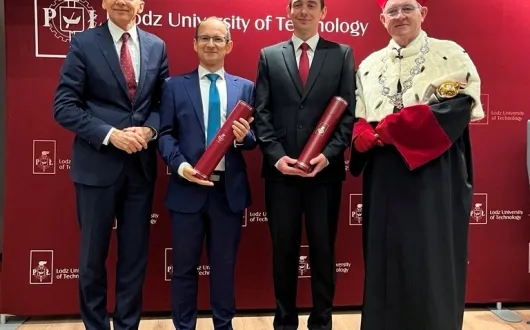
On May 12, 2026, a ceremonial meeting of the Senate of the Lodz University of Technology dedicated to the promotion of doctoral and habilitation degree recipients was held at Alchemium 🎓🏛️
Authored on
Kategorie
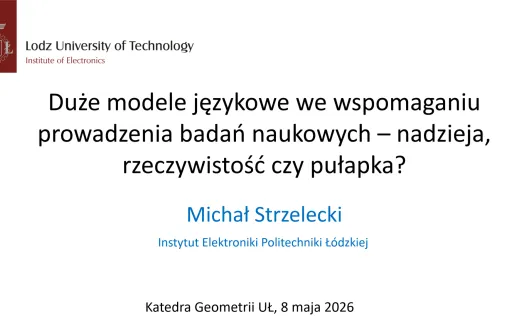
A staff member of our Institute, Prof. Michał Strzelecki, delivered a seminar for the staff and students of the Department of Geometry at the University of Lodz entitled “Large Language Models in Supporting Scientific Research - Hope, Reality, or a Trap?”
Authored on
Kategorie
The Lodz University of Technology is implementing the project “Intelligent Education - the Use of Data in Studying Learning Effectiveness”, aimed at developing modern teaching methods based on data analysis and the learning analytics approach 📈💡. The project supports the development of a modern education model focused on competencies, personalization of the learning process, and better alignment of education with labor market needs.
Authored on
Kategorie
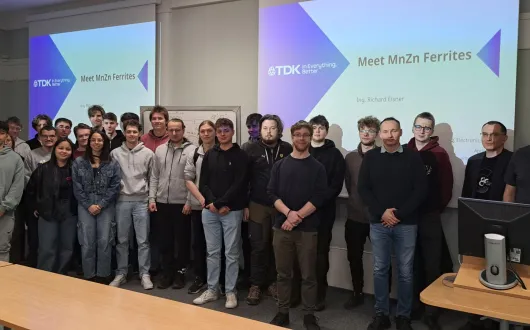
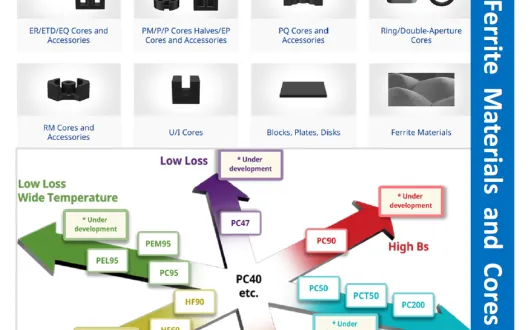
On April 14, 2026, an expert lecture titled “Meet MnZn Ferrites” was held at the Lodz University of Technology, focusing on topics related to MnZn ferrites. The session was led by engineer Richard Elsner from TDK Corporation – a global manufacturer of electronic components 🌍⚡
Authored on
Kategorie
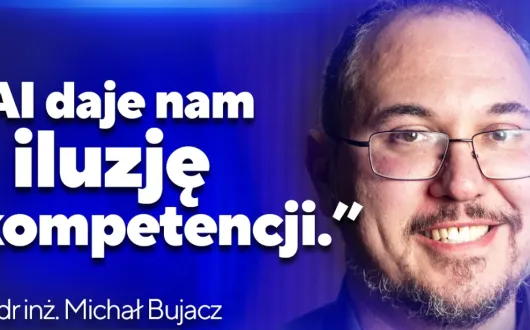
We warmly invite you to tomorrow’s premiere of the series "Sztuczna inteligencja po ludzku"!
Authored on
Kategorie
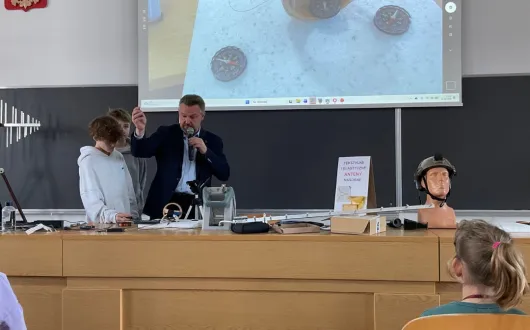
On April 11, on the International Day of Children's Universities, a staff member of the Institute co-created an event as part of the Lodz University of Children at Lodz University of Technology 👧👦
Authored on
Kategorie
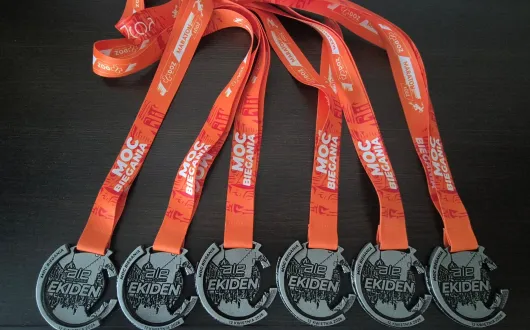
The Free Electrons team from the Institute of Electronics took part in the DOZ Łódź Marathon relay race for the second time! 🎉
Authored on
Kategorie
The lecture, held in English and titled “Meet MnZn Ferrites,” will be delivered by Richard Elsner, MSc - Product Design Engineer and Head of the Measurement Laboratory at TDK Electronics.

Authored on
Kategorie
On the occasion of Easter, we wish all Employees, Students, PhD Students, and Friends of our Institute good health, peace, and joy.