In their latest article, researchers from our Institute analyze how different EEG signal augmentation methods affect the performance of motor imagery classification in BCI (Brain-Computer Interface) systems.
🎯 Study objective:
To determine which EEG data augmentation techniques genuinely improve the accuracy of the EEGNet neural network in a three-class task: imagined left-hand movement, imagined right-hand movement, and resting state.
🔬 What was done
An open EEG dataset was used (25 participants, 64 channels).
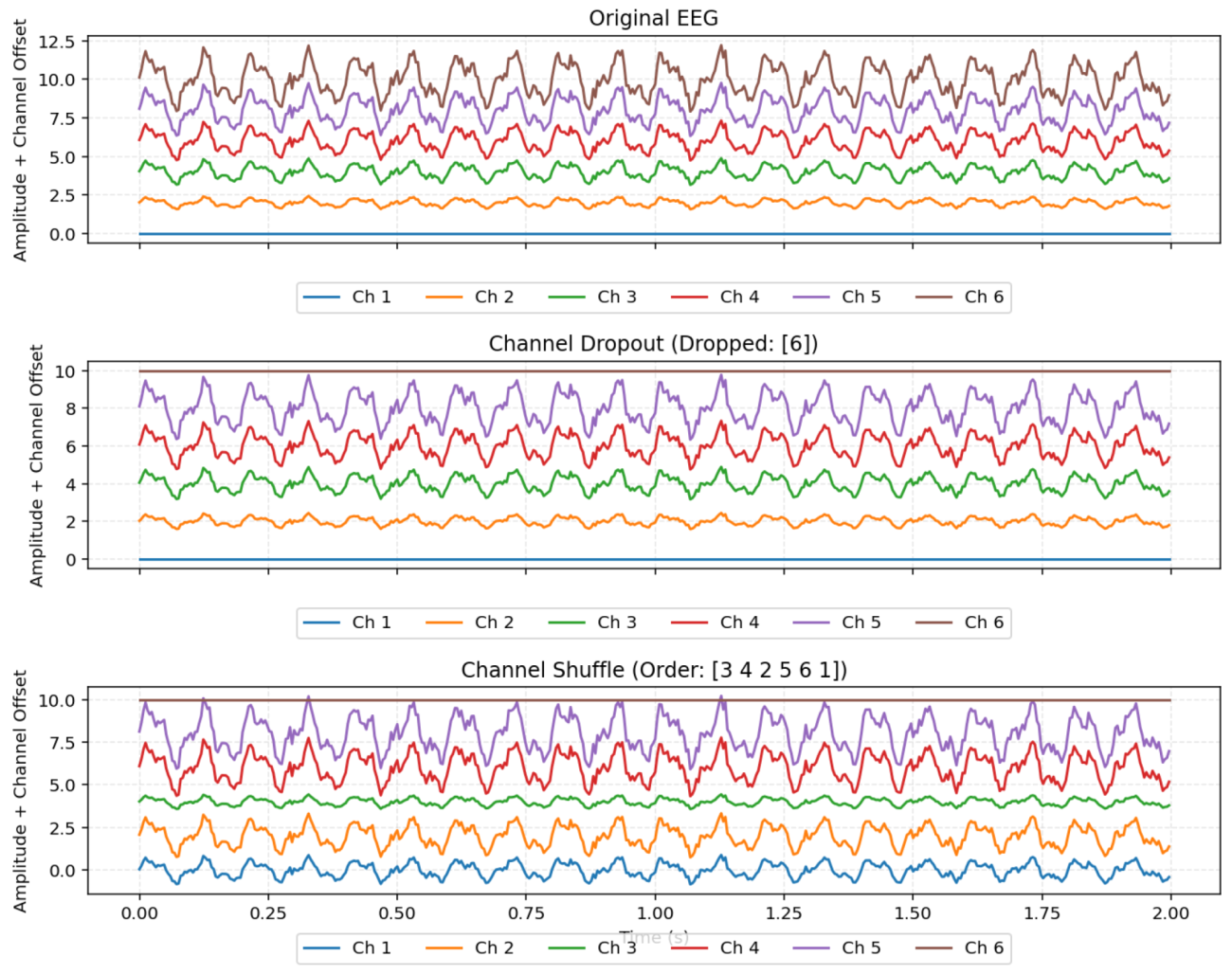
A total of 12 augmentation methods were tested - including temporal, spatial, frequency-domain, and generative approaches (e.g., VAE and GAN).
The methods were analyzed both individually and in cascades of 2-3 techniques.
Different data-splitting strategies (intra-subject and inter-subject) were compared, along with various ratios of original to synthetic data.
📊 Key findings:
Augmentation can significantly affect classification accuracy - some methods degrade performance, while others improve model generalization.
Combining multiple techniques often yields better results than using a single method.
The choice of data-splitting strategy is crucial for a reliable evaluation of performance, particularly in clinical applications.
💡 Why does it matter?
The results have direct implications for the design of BCI systems in neurorehabilitation. They demonstrate how to prepare data so that deep learning models perform more effectively with limited real patient data and generalize better to new users.
📘 We encourage you to read the full article - a practical guide to the informed use of augmentation in EEG analysis:
Sztyler B., Królak A., Strumiłło P. (2026), "Influence of EEG Signal Augmentation Methods on Classification Accuracy of Motor Imagery Events", Sensors, 26(4), 1258. https://doi.org/10.3390/s26041258